The Future of Work 2025: AI and Automation in the Modern Office
The Future of Work 2025 is being redefined by Artificial Intelligence and automation. From digital assistants to AI-driven analytics, technology is reshaping how we collaborate, create, and succeed in modern workplaces.

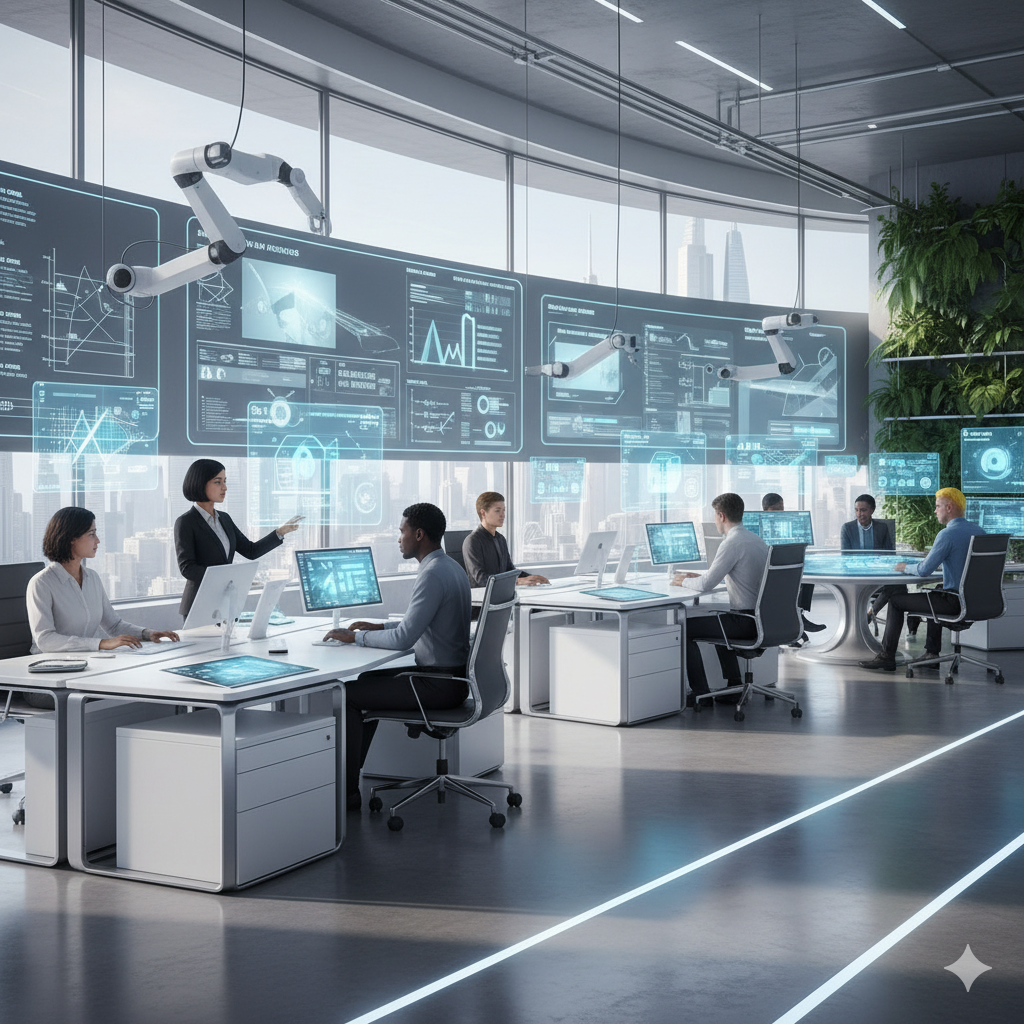
As we enter 2025, the workplace is evolving faster than ever. AI is no longer just a support tool — it’s an intelligent co-worker that analyzes data, automates repetitive tasks, and enables humans to focus on creativity, leadership, and innovation.
🤖 1. AI as the New Digital Co-Worker
AI assistants such as Microsoft Copilot, ChatGPT, and Notion AI are revolutionizing productivity. They summarize meetings, draft emails, and analyze data in seconds. In the Future of Work 2025, employees collaborate with AI to make faster, more informed decisions.
💼 2. Automation in Business Processes
Robotic Process Automation (RPA) is taking over routine work — from invoice processing to HR onboarding. AI-driven workflows streamline tasks, improve accuracy, and cut operational costs by up to 40%.
🌐 3. Remote and Hybrid Work Reinvented
The pandemic accelerated digital transformation, and 2025 solidifies hybrid work as the new norm. Cloud collaboration tools like Google Workspace and Microsoft Teams now integrate AI scheduling, automatic transcription, and smart project insights.
📊 4. Data-Driven Decision Making
AI analytics tools interpret massive datasets instantly, helping leaders predict trends, measure employee satisfaction, and enhance workflow efficiency. Decision-making is now based on predictive insights, not guesswork.
🏢 5. The Rise of Smart Offices
Smart sensors, IoT devices, and automation systems make offices more energy-efficient and secure. Lighting, temperature, and resource allocation are managed by intelligent systems, creating eco-friendly and employee-centric environments.
🎯 6. Upskilling and Human-AI Collaboration
As automation handles repetitive work, the focus shifts toward skills like creativity, critical thinking, and emotional intelligence. Companies are investing heavily in AI literacy and reskilling programs to prepare employees for the future.
⚙️ 7. Cybersecurity in the Automated Era
Increased automation means higher exposure to cyber threats. Businesses are implementing AI-powered security systems to detect anomalies, protect sensitive data, and prevent breaches before they occur.
🌍 8. The Global Impact of AI on Employment
While AI automates millions of jobs, it also creates new roles — AI trainers, data analysts, automation specialists, and digital ethicists. The Future of Work 2025 is not about job loss but about job evolution.
🧩 9. Integrating AI with Cloud Technology
Cloud computing provides the infrastructure that powers workplace automation. Check our article Why Cloud Hosting is Better for Business to learn how scalable systems support AI deployment across enterprises.
💬 10. Ethical AI and Workplace Transparency
Transparency is key in automated workplaces. Companies must ensure AI systems are fair, explainable, and compliant with labor laws to maintain employee trust and accountability.
🏁 Conclusion
The Future of Work 2025 is not just digital — it’s human-centered. By combining AI, automation, and empathy, businesses are creating smarter, safer, and more inclusive work environments. Success in this new era belongs to those who can adapt, collaborate with AI, and continuously learn.
Also read: AI in Finance 2025 — discover how artificial intelligence is reshaping the financial sector.
According to World Economic Forum’s Future of Jobs Report, AI and automation will create over 97 million new roles globally by 2025.
Frequently Asked Questions (FAQ)
1) What is the Future of Work in 2025?
The Future of Work 2025 revolves around automation, hybrid models, and AI-powered collaboration tools that enhance efficiency and creativity.
2) How is AI changing office productivity?
AI automates repetitive tasks, summarizes data, and supports real-time collaboration — freeing employees to focus on strategic goals.
3) Will AI replace office jobs?
AI won’t replace people but will replace tasks. Workers who adapt and upskill will thrive alongside automation.
4) What are smart offices in 2025?
Smart offices use IoT sensors, AI systems, and data analytics to optimize lighting, space, and security for productivity and comfort.
5) What skills are most valuable in 2025?
Critical thinking, creativity, communication, and AI literacy are essential skills for the future workplace.
SEO Keywords: Future of Work 2025, AI automation office, digital workplace 2025, smart office, hybrid work trends